
KURA 20th Anniversary Special Page
KURA(Kanazawa University Repository for Academic Resources) Celebrates Its 20th Anniversary on June 12, 2026!
This page looks back on the 20-year history of the Kanazawa University Repository for Academic Resources through key milestones and statistics, and introduces its future directions.

KURA is the institutional repository of Kanazawa University. It preserves in digital form and makes publicly available via the Internet scholarly information (content) produced by the University’s faculty members, staff, and other affiliated researchers as a result of their education and research activities. Serving as a showcase of the University’s achievements in research and education, KURA provides indexes organized by academic unit and by resource type.
Growth in the Number of Items in KURA
※Only the total number of registered items is available for FY2006–FY2009, as no breakdown data exist.
※The relatively large number of bulletin articles is consistent with trends observed in institutional repositories at other universities in Japan.
※A characteristic feature of KURA is the relatively high number of research reports, which is considered to reflect the early practice of registering Grant-in-Aid (KAKENHI) research reports in order to increase the number of registered items.
Trends in Registered Scholarly Articles in KURA
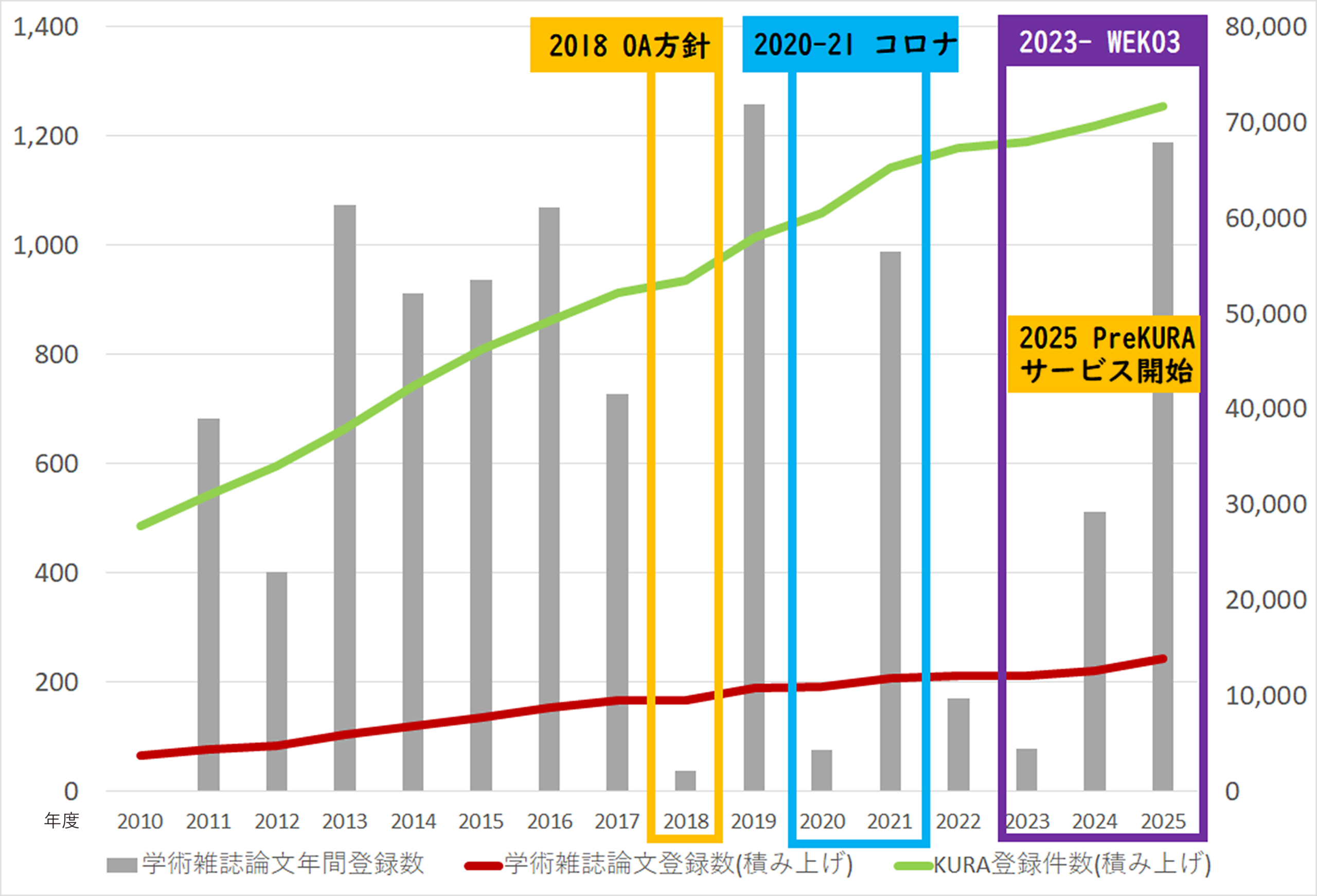
※Although an Open Access policy was established in FY2018, the number of voluntary submissions from faculty members remained limited. Registrations increased in FY2019, followed by a decline in FY2020.
※In May 2024, the hiring of a new full-time staff member contributed to an increase in the number of registrations.
Changes in the Distribution of Content Types in KURA (FY2010 vs. FY2025)
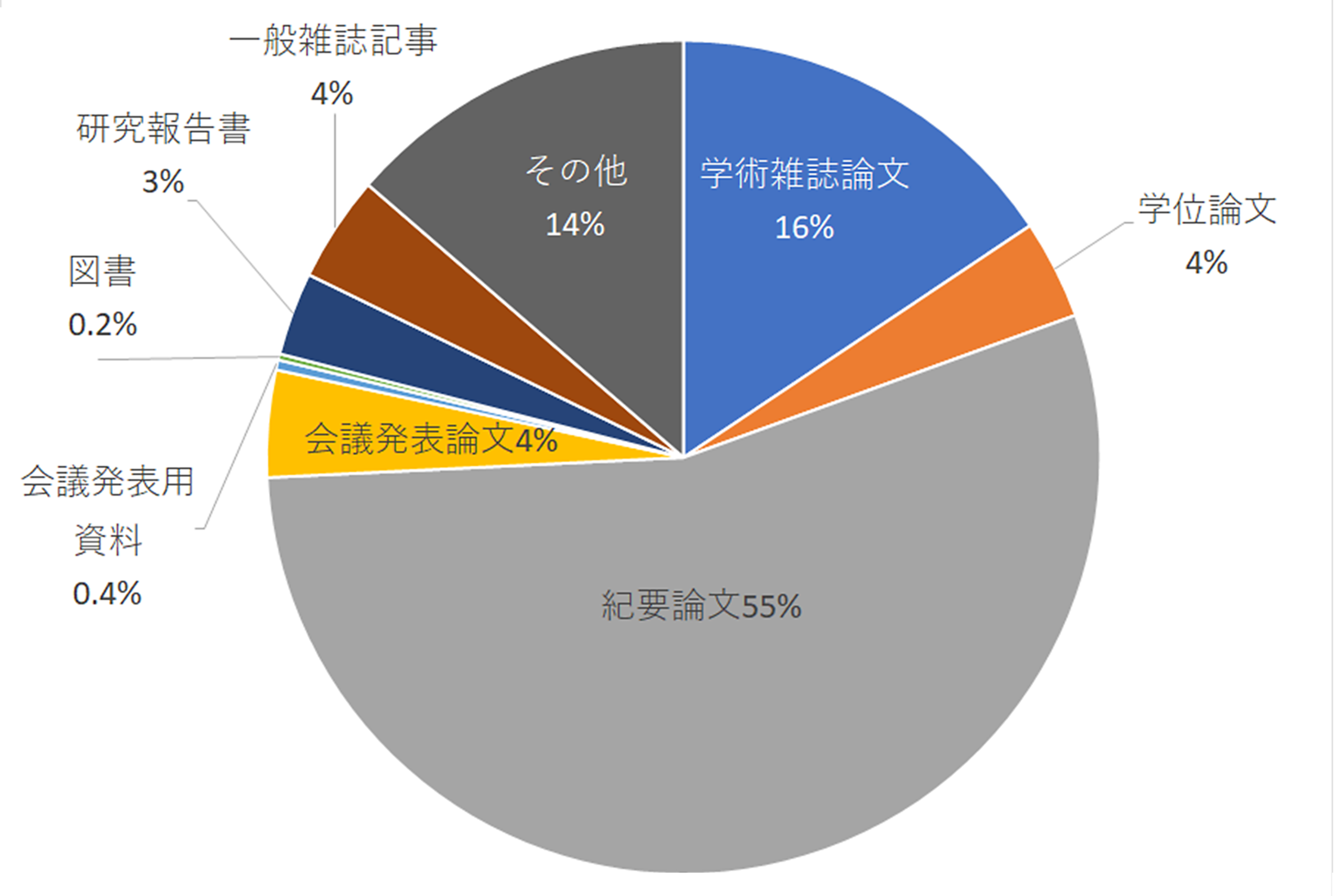
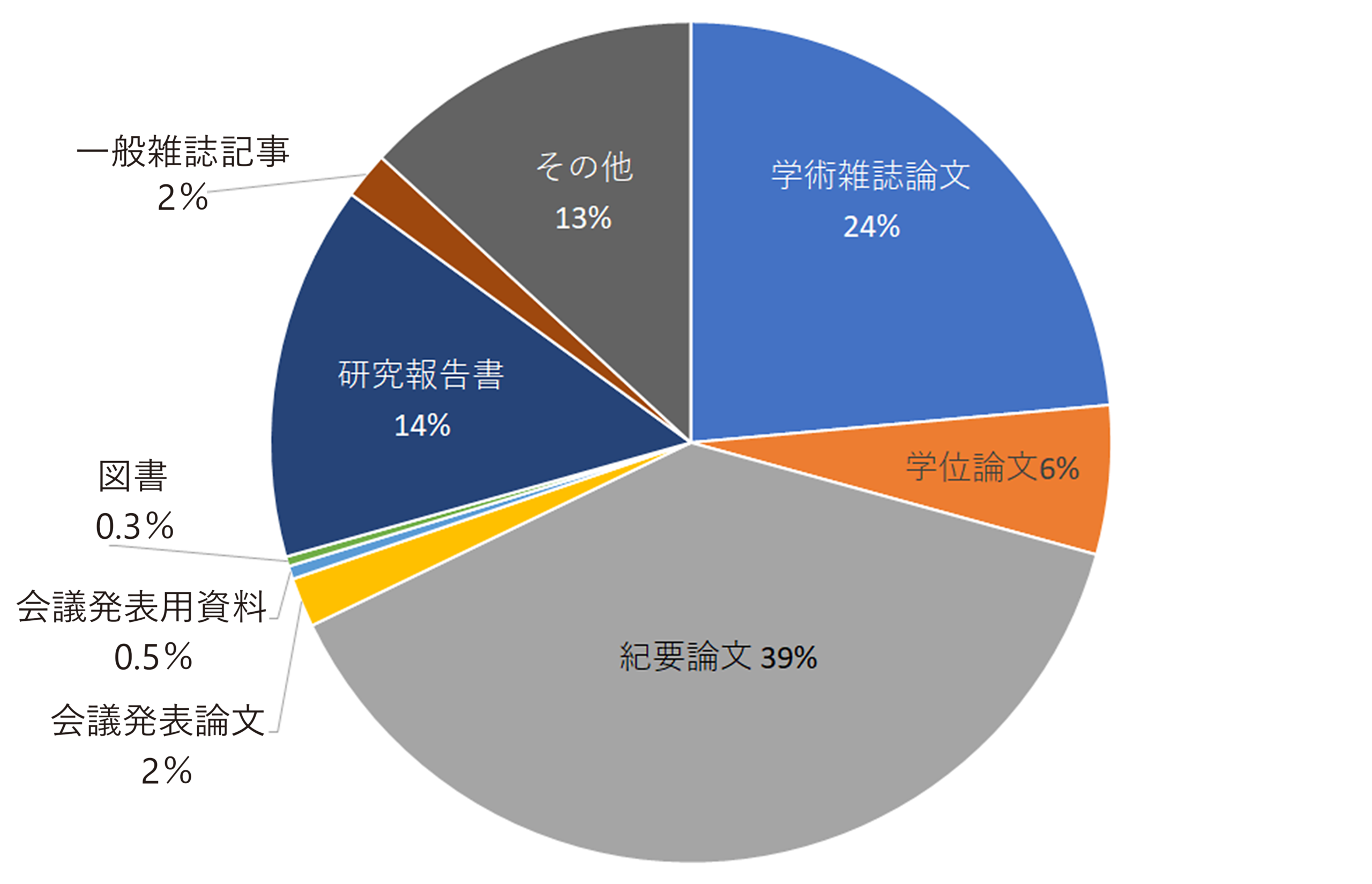
※Bulletin articles account for a relatively large proportion of the total, while the proportion of journal articles has also been increasing.
History of KURA
Launch of the NII “Collaborative Construction of Next-Generation Academic Content Infrastructure”
→Increasing momentum toward Green OA
Sep.
Selected for the NII “FY2005 CSI (Cyber Science Infrastructure) Project”
Oct.
Establishment of the Committee on the Institutional Repository of Kanazawa University (Faculty Organization)
Dec.
Held IR briefing sessions at faculty meetings and conducted an internal survey on copyright, IR registration of institutional bulletins, and willingness to deposit academic articles.
Mar.
Report of the Committee on the Institutional Repository of Kanazawa University
Approval of the “Guidelines for the Establishment of the Kanazawa University Institutional Repository”
Apr.
Selected for the NII “FY2006 CSI (Cyber Science Infrastructure) Project”
May
Approval of the “Kanazawa University Institutional Repository Operational Guidelines”
June 12: Launch ofKURA
Jul.
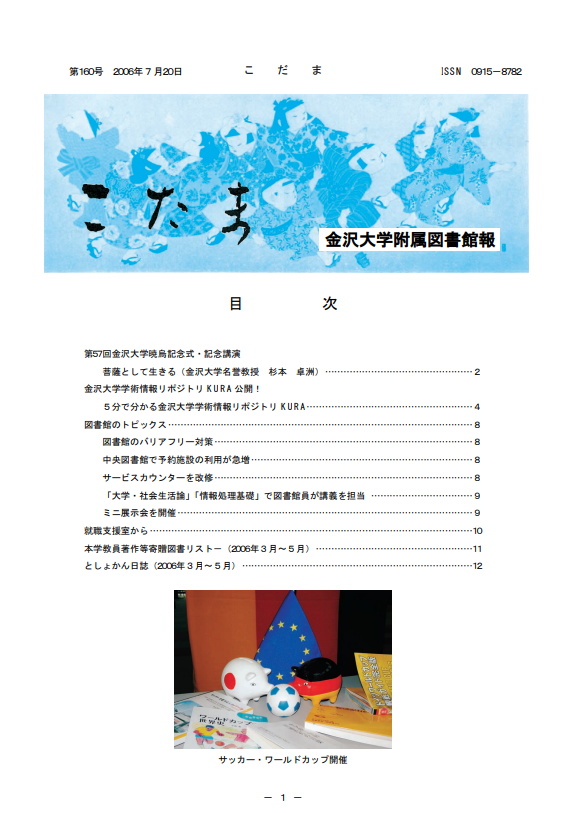
Featured in Issue No.160 of the library newsletter “Kodama”
Dec.
Held briefings at faculty meetings on requests for content submission to KURA
Apr.
Selected for the NII “FY2007 CSI (Cyber Science Infrastructure) Project”
Jul.
Selected for the NII “FY2008 CSI (Cyber Science Infrastructure) Project”
Jul.
Selected for the NII “FY2009 CSI (Cyber Science Infrastructure) Project”
Feb.
Held the symposium“Mission of University Libraries and Institutional Repositories”
Jul.
Selected for the NII “FY2010 CSI (Cyber Science Infrastructure) Project”
Oct.
In conjunction with International Open Access Week 2010,author interviews were conducted for the top 20 most downloaded KURA items.
Enforcement of the Ministerial Ordinance Revising Part of the Degree Regulations
Online publication of doctoral dissertations
Promotion of the Openness of Academic Information (Deliberation Summary)
A checkbox for “Deposited in the repository” was added to KAKENHI reports.
Apr.
Establishment of the Open Access Policy Working Group (Faculty Organization)
The number of registered journal articles exceeded 10,000!
Apr.
Implementation of the Kanazawa University Open Access Policy
Implementation of the Kanazawa University Open Access Policy Implementation Guidelines
Jun.
Kanazawa University Institutional Repository Operational Guidelines (Revised June 2024)
Recipient of the Kanazawa University Special Award (FY2025)
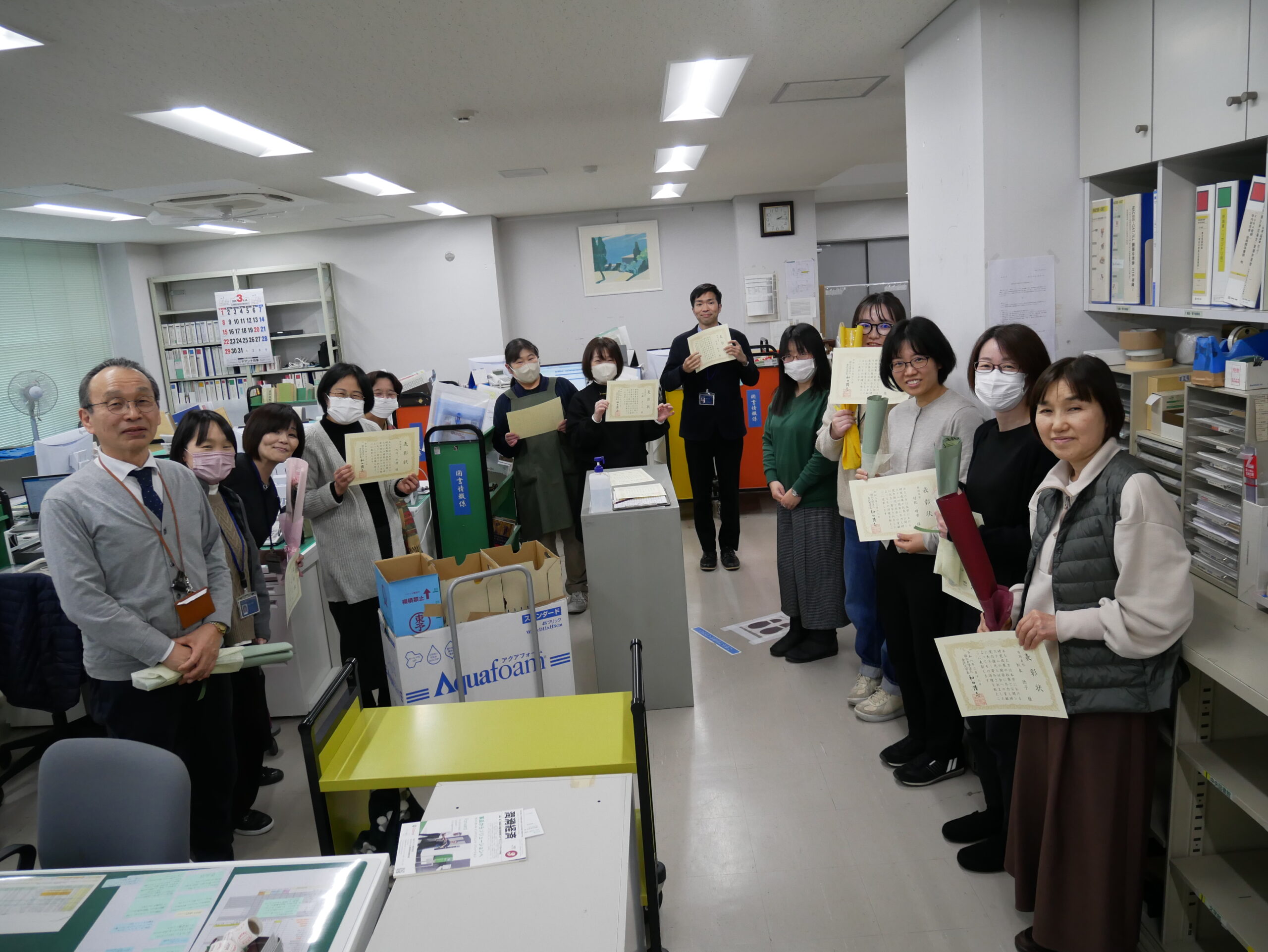
“Development of PreKURA and initiation of collaboration with OSS”
A repository (KURA) registration support system for promoting open access. Developed in FY2024 under the Open Access Acceleration Project to enable the publication of metadata for both research articles and research data.
PreKURA automatically collects publication information of the university’s researchers from researchmap, as well as article supporting data and research data metadata from OSS. It performs format validation and supplements missing items within the system to generate high-quality metadata for registration in KURA, and also enables communication between the library and researchers. In addition, the system provides researchers with a means to visualize their open access status.
→Registration with Kanazawa University Academic Information Repository (KURA)
Future Prospects
In order to further develop KURA, we will promote the implementation and enhancement of the following functions.
・By transitioning from the current researchmap-based ingestion of publication information to an OSS-enabled ingestion approach, we will integrate DMP information with publications and research data, thereby establishing a research information infrastructure that provides end-to-end support from the initiation of research through to the dissemination of results.
・By leveraging AI technologies, we will automate and enhance processes such as metadata enrichment, open access (OA) status determination, and verification of publisher policies, thereby reducing the workload of both researchers and administrators.
・We will strengthen the linkage between publications and supporting data, and establish an integrated management system for research outputs and research data through the connection of DOIs and metadata.
・Assuming interoperability with GakuNin RDM, WEKO3, CiNii, and related systems, we will examine an appropriate division-of-labor model with OA support functions (such as OA Assist) to improve the efficiency and sophistication of research output dissemination support.
Link
Library support for open access(OA)!
”The Gold Key and the Green Key: An Introduction to OA”
Kanazawa University Repository for Academic Resources “KURA”
Hashi, Yohei
General Affairs Department, Kanazawa University
Academic Information Division
(Rare Materials Section)
Section Chief responsible for the initial launch of KURA
Date of preparation:
June 25, 2026
When discussing the launch of KURA, it is impossible to omit “Mr. Uchijima in 2005.” At the time, he was the Deputy Director of the Information Planning Division, Mr. Uchijima Hideki, who passionately and rapidly advocated for the significance of university libraries maintaining institutional repositories, making extensive use of English loanwords that could be described as “Uchijima-terms.” This initiative (also one of his characteristic “Uchijima terms”) became the starting point of KURA. I was also involved in the launch of KURA, but in practice I mainly acted in alignment with Mr. Uchijima’s vision and facilitated various tasks. In retrospect, it may be fair to say that “Mr. Uchijima spoke, and I recorded.” As a result, shortly after the launch of KURA, I contributed the following article to 『Journal of college and university libraries』
Journal of college and university libraries 79, pp.18-26, 2007-03-31
The formative years of KURA are largely documented in this article. However, in celebration of its 20th anniversary, I would like to take this opportunity to share some “notes that can only be told now” about this definitive account, along with a few “interesting behind-the-scenes anecdotes” that may not be particularly significant but are, I believe, quite enjoyable. Think of them as “Another Stories”—or, borrowing a television analogy, a kind of “audio commentary track” to accompany the main feature. I hope you will enjoy reading them in that spirit.
1. Let’s Build an Institutional Repository
Around 2005, shortly after Japan’s national universities were incorporated, virtually no one at Kanazawa University Library was familiar with the term “repository”. The person who first proposed that the university should establish one was Mr. Uchijima. Then, as now, the escalating cost of foreign journals and electronic journals was a major issue. What was the solution? To create an alternative route for scholarly communication outside the distribution channels dominated by commercial publishers. That alternative was the Institutional Repository (IR).
After reading Stevan Harnad’s “A Subversive Proposal”, Mr. Uchijima sought to promote its underlying concept—namely, Open Access—throughout both the university and the library. Organizational decision-making is often described as either top-down or bottom-up. In the case of KURA at Kanazawa University, however, it could be said to have begun through a middle-up approach—a term that, admittedly, is not heard very often.
2. KURA Was Made Possible by the CSI Project
Then came a favorable development in terms of funding: the CSI Project led by the National Institute of Informatics (NII). (The official name of the project was rather long and complicated, so I will omit it here. At the time, everyone simply referred to it as the “CSI Project.”) By then, various initiatives to improve scholarly communication were already gaining momentum worldwide, and it is fair to say that both NII and Mr. Uchijima hoped to harness this new movement to advance Japan’s university library community.
With the support of the CSI Project, KURA was launched alongside those of its “contemporaries” (all of which are also celebrating their 20th anniversary this year), including Chiba University, Hokkaido University, the University of Tsukuba, Kyushu University, and Okayama University. The project enabled us to establish not only the system itself but also its initial content, including the registration of the university’s academic bulletins. Without the CSI Project, KURA would almost certainly not have been established so early, becoming one of the first ten institutional repositories in Japan.
3. Choosing the System
One of the first key decisions in launching KURA was the selection of the system. At the time, JAIRO Cloud did not yet exist, and cloud-based services in general were not widely available. We therefore considered deploying a server within the university. From the perspective of long-term sustainability, integrating the repository with the library’s operational systems was also discussed, but cost ultimately proved to be a major obstacle.
The reasoning was that “for institutional repositories, open-source software is available and supported by an active user community,” and that “the university’s Integrated Media Infrastructure Center (then part of the same Information Division as the University Library and now the Institute of Science and Engineering’s Academic Media Creation Center) was also interested in establishing an institutional repository, so perhaps we could manage and operate it ourselves.” Based on this assessment, we ultimately decided to adopt DSpace, installing it on a server maintained by the Media Center (with the hardware installation and related work carried out by an external vendor).
The following image shows the design of KURA’s homepage at the time of its launch.
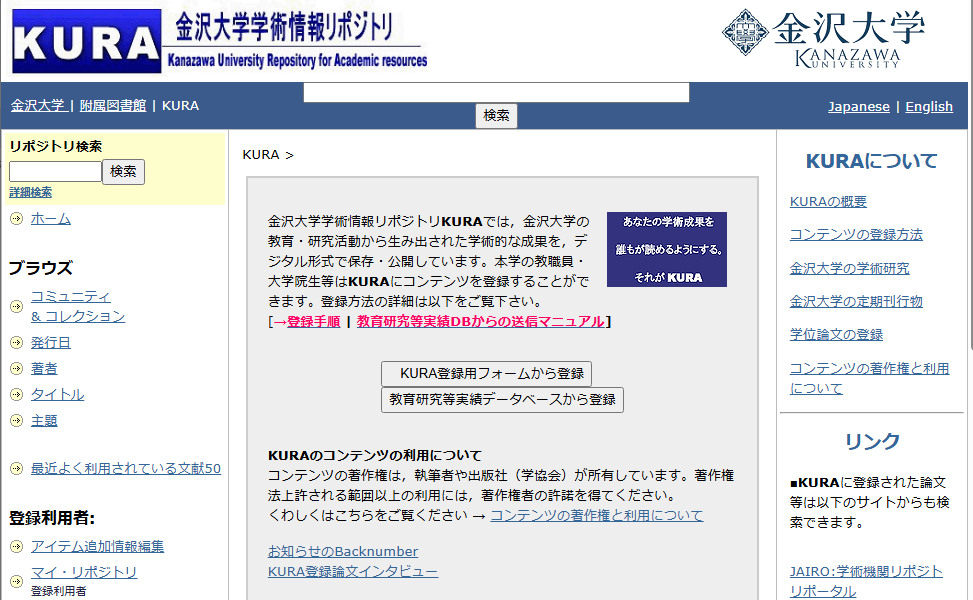
【By the Way 1】The simple “KURA” logo shown above (↑)—white lettering on a blue background, if it can even be called a logo—was something I put together as a temporary design. Despite its humble origins, it remained in use until KURA migrated to JAIRO Cloud.
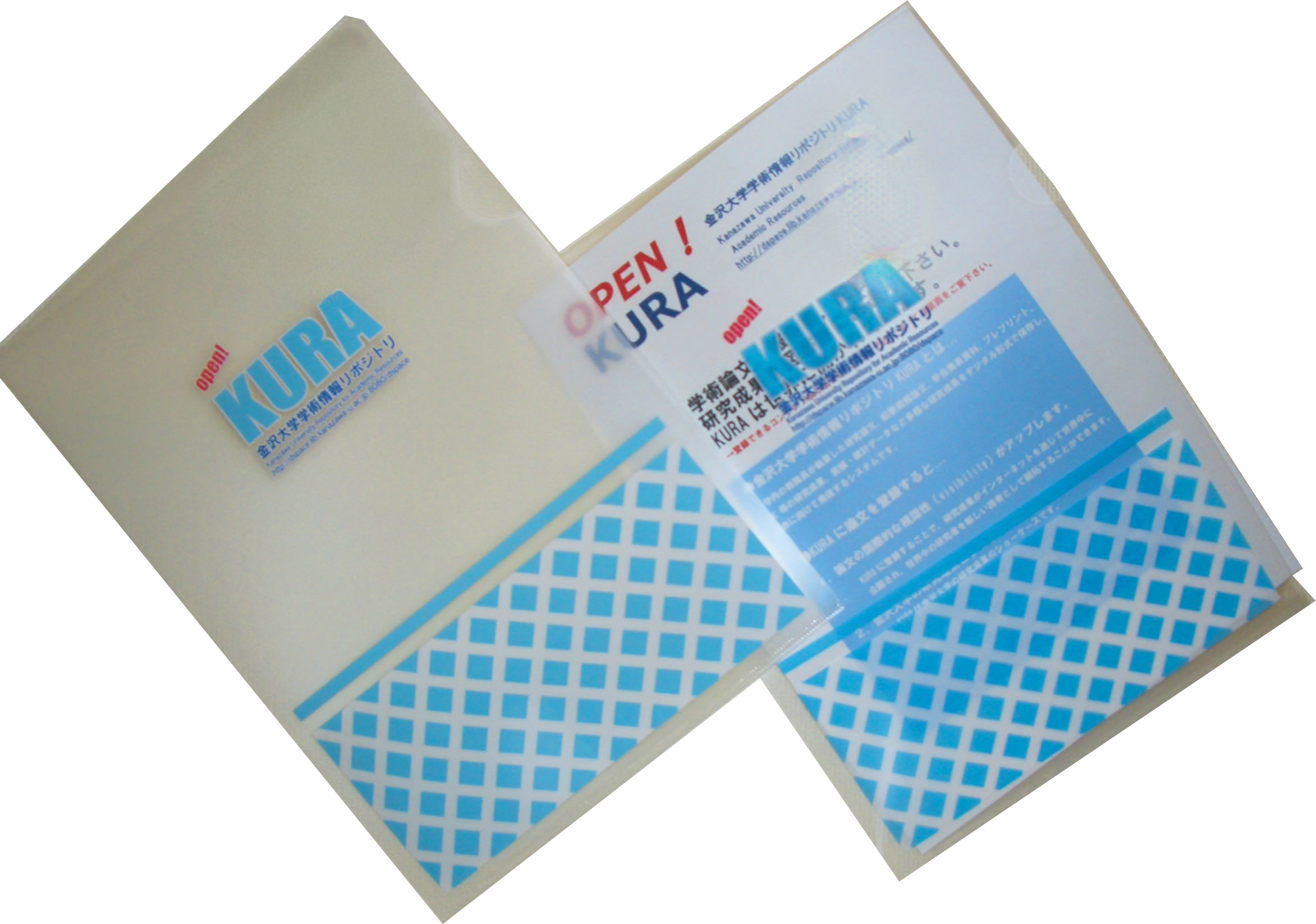
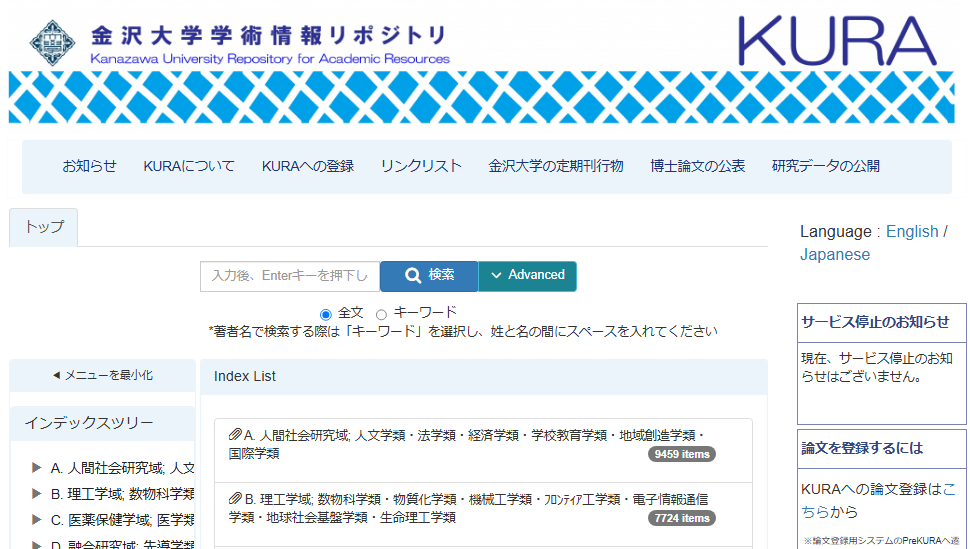
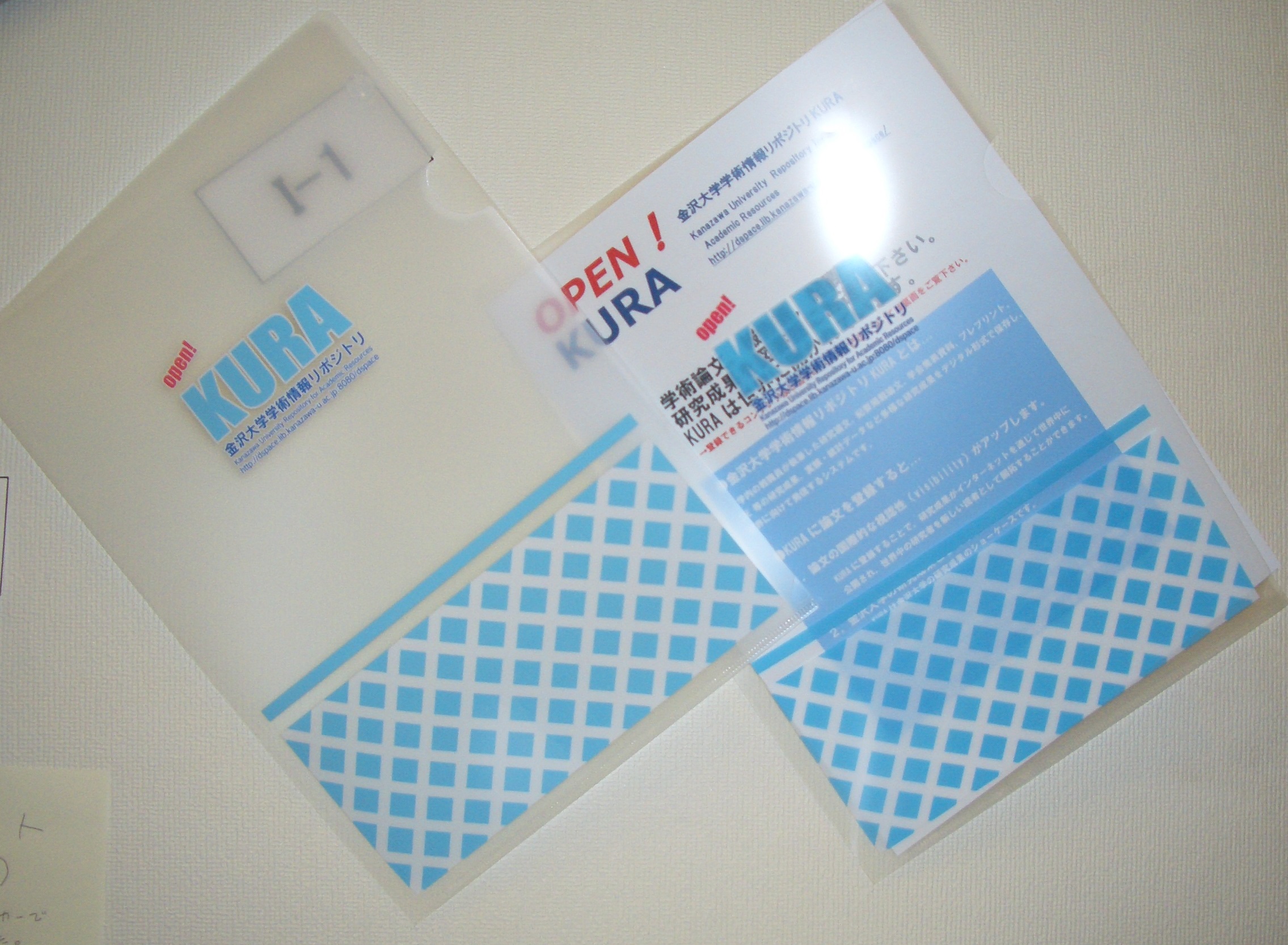
【By the Way 2】When it comes to KURA, the name evokes the idea of a “kura” (traditional Japanese storehouse). Accordingly, the current KURA homepage (↓) features a namako-wall-inspired design. This design is derived from a clear file created at the time of the project’s launch (↓↓), as shown below.
4. Make Sure to Follow the Formal Procedures
At the initiative of Mr. Uchijima, efforts toward the launch of an “institutional repository (not yet named)” began to take shape. It was agreed that “this is also an extremely important initiative for university libraries, so we should make sure to follow proper procedures.” Accordingly, the then library director and administrative managers (Director Tetsuya Hashimoto, Information Division Director Nobumichi Yura, Information Planning Section Chief Kinoshita Satoru, and others) were brought into the process. A conventional approach of formal top-down authorization was adopted.
In late October 2005, the “Kanazawa University Institutional Repository (IR) Steering Committee (hereinafter the ‘Steering Committee’)” was first established. The Committee finalized draft versions of the “Kanazawa University Institutional Repository Regulations” and the “Kanazawa University Institutional Repository Operational Guidelines,” which defined the scope of materials to be registered and the operational framework of the repository. Subsequently, reports were submitted to the Library Committee, the Information Planning Council, and the Education and Research Council, among others. Ultimately, formal approval was obtained, confirming that “KURA is the university-wide institutional repository.”
At the time, the Steering Committee included faculty members from a wide range of disciplines. Among them were a science and engineering professor strongly critical of rising electronic journal prices, a faculty member with experience in the operation of arXiv, a physics preprint server often regarded as a precursor to institutional repositories, and a professor responsible for database systems at the university’s Integrated Media Infrastructure Center. These highly capable members, representing a well-balanced mix of expertise, provided strong support for the library’s new initiative.
5. We Enjoyed the Process of Naming It
The name of the institutional repository was also finalized by the Steering Committee, based on several proposals developed by the University Library staff. Reviewing the documents from that time, one finds a number of ideas—some of which may appear rather playful in hindsight. Nevertheless, they reflect the fact that we were enjoying the process while considering a new service.
Examples of alternative proposals to “KURA” were also put forward
・KUDOS(Kanazawa University Repository for Digitalized Outcomes)
・KURIP(Kanazawa University Repository of Intellectual Properties)
・KUIR(Kanazawa University Institutional Repository)
・Kanazawa University Repository(Examples of alternative proposals to “KURA” were also put forward.)
As with many universities whose names begin with “K,” there are a large number of institutions starting with the letter “K.” In that sense, the simple name “KURA” may have been something of a case of “first come, first served.”
Incidentally, among the more lighthearted proposals I submitted was RIKUTUNA (ReposItory of Kanazawa University for The UNlimited Access). While it did receive some support, it was ultimately rejected on the grounds that the English acronym was “a bit too strained…” and that it was “too local in nature” (the term “rikutsunā” is a Kanazawa dialect expression meaning “well-constructed” or “cleverly done”).
6. Memorable Visits to the Faculties
With the aim of effectively implementing a new library service across the entire university, and in parallel with the activities of the Steering Committee, we conducted a series of visits—led by the section chief and others—to all faculties, including meetings of faculty councils, to explain what an “institutional repository” is and to request cooperation.
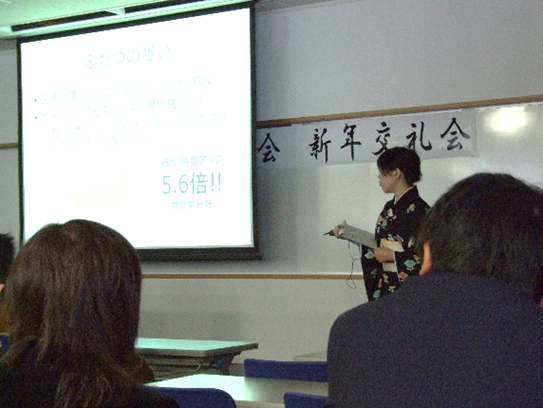
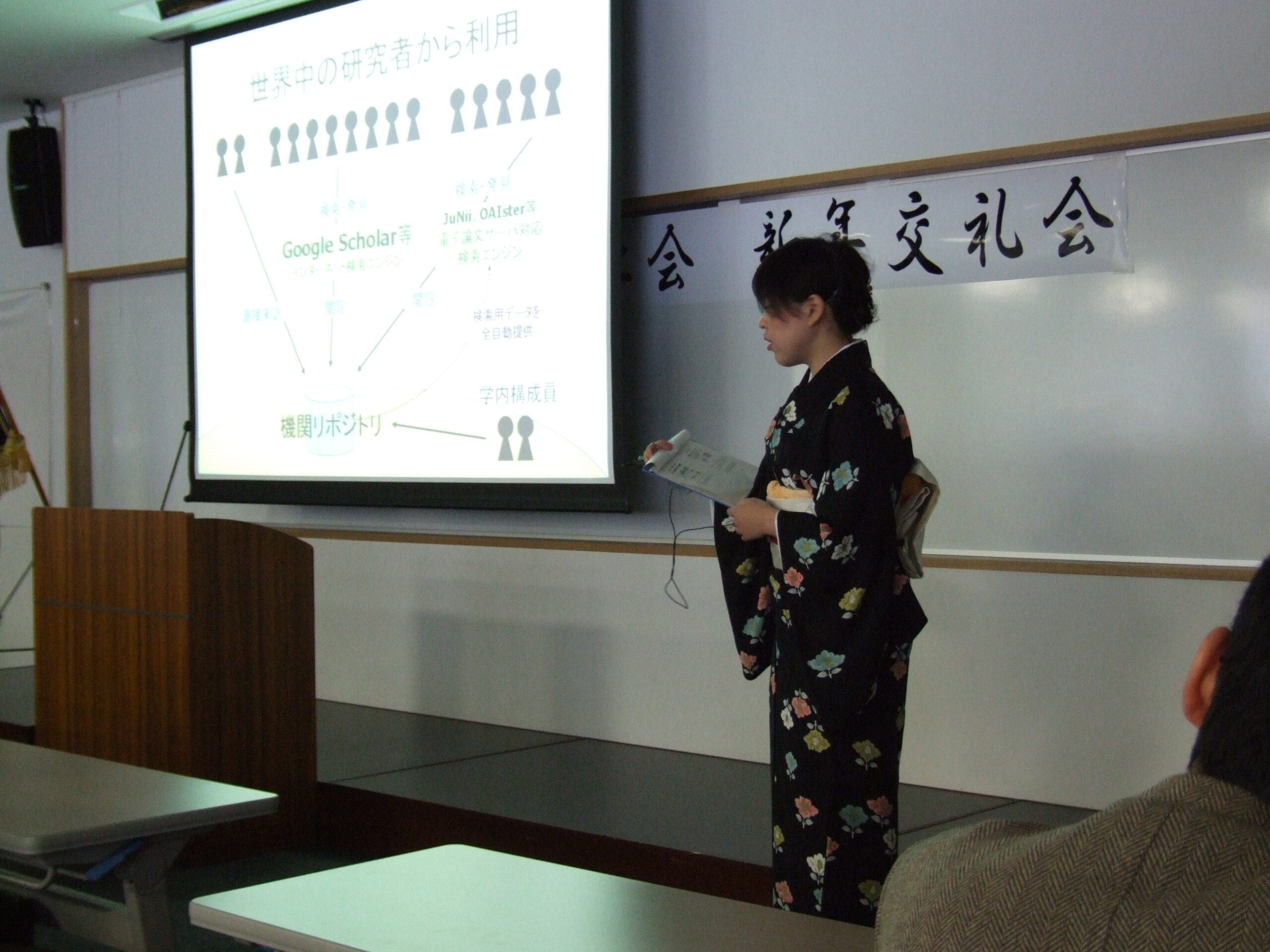
The presentation at the Faculty of Engineering happened to take place in early January, and it was decided that “if we want to stand out, the only option is to wear a kimono,” so the presentation was delivered in formal Japanese dress. “Thank you, Ms. Igawa!” I would like to take this opportunity to express my sincere gratitude.
7. Memories of the Education and Research Council Presentation
Just before the official launch of KURA in June 2006, I recall giving a presentation and demonstration at the Education and Research Council in front of then-President Yujiro Hayashi and many faculty members. At that point, the KURA system was already operational, and the purpose was to allow participants to experience firsthand how it actually worked.
What had been carefully prepared in advance for this occasion was a so-called “green paper.” With the cooperation of a co-author, we obtained the author’s accepted manuscript of a paper written by the president and published in an Elsevier journal. A few additional papers were also registered in advance so that they could be demonstrated during the session.
Yoshioka, H ; Tada, Yukio ; Hayashi, Yujiro . Crystal growth and its morphology in the mushy zone . Acta Materialia. 52 pp.1515-1523, 2004-04-05. Elsevier URL:http://hdl.handle.net/2297/1627
I am not sure whether the term “author’s final manuscript” was fully retained, but I believe the participants were able to experience that papers essentially identical to those available in electronic journals could be read “for free.”
8. Final Step: Press Release
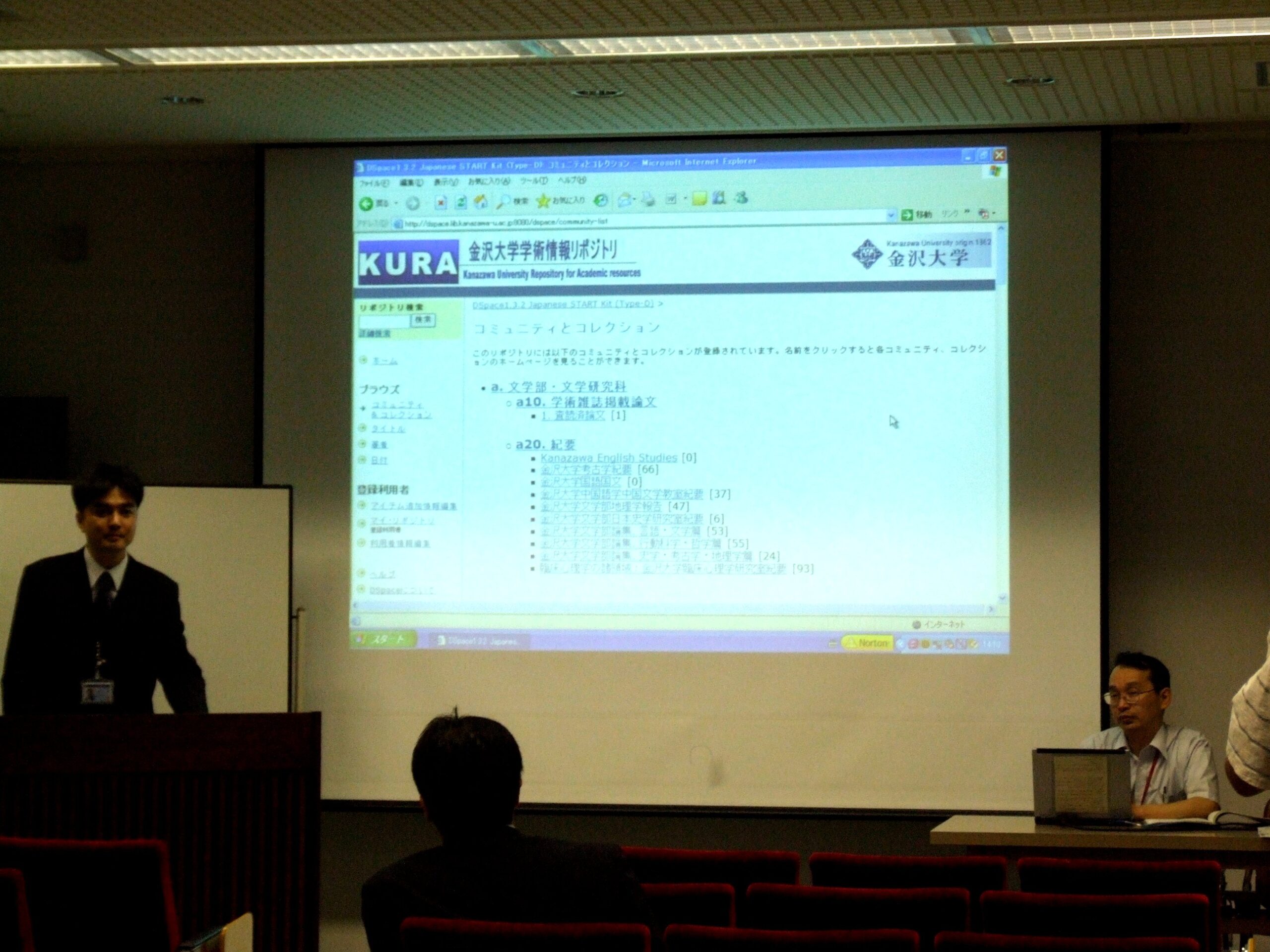
As the final activity in the launch of KURA, a press release was issued, accompanied by a demonstration held in the audiovisual room of the Central Library. A search reveals the following document: press release.
To our surprise, local television (Hokuriku Broadcasting) covered the event. The then library director, Mr. Kashima Masahiro, and Information Planning Section Chief Mr. Kinoshita Satoru provided explanations, while I conducted the demonstration.
9. DRF Connecting Institutional Repository Managers Nationwide
Since around 2006, a key community that supported institutional repository initiatives at universities across Japan from various perspectives and connected those in charge of such activities was the DRF (Digital Repository Federation), a nationwide community of university libraries and librarians.
The activities of the DRF were carried out as part of the CSI Project initiative, “Activation of the Institutional Repository Community.” At the same time, it gave the strong impression that library staff at universities were organically and voluntarily connected with one another, creating a kind of virtual yet remarkable sense of unity. Kanazawa University, together with institutions such as Hokkaido University and Chiba University, had been involved as a steering member since the early days of the DRF’s establishment.
In daily practice, information was actively exchanged via a mailing list. I still recall Mr. Uchijima’s encouragement: “Just write anything on the DRF mailing list (i.e., help keep it active).” As a result, I ended up posting quite literally anything, as long as it was even loosely related to institutional repositories.
For example, discussions were not limited to technical questions about systems such as DSpace, but also covered a wide range of topics including training, outreach, and awareness-raising activities at each university. What had originally started, I believe, as “OA skits” at Hokkaido University evolved into “OA picture-story shows (kamishibai)”. Furthermore, various workshops held at venues such as the Library Fair helped foster connections among librarians on a nationwide scale.
It was, in retrospect, quite groundbreaking that the activities of librarians extended beyond individual universities and developed into a nationwide network. This spirit of collaboration is likely reflected today in the activities of JPCOAR.
Having written at length about various aspects of KURA’s formative period, I would say that although the era in which institutional repositories were rapidly established across Japanese university libraries involved many challenges, it was also an exciting time in which we were able to experience the joy of launching a new service.
(P.S.)
The content of the “OA skits” that originated at Hokkaido University spread nationwide and evolved into the “OA picture-story show (kamishibai)” at Hyogo University of Teacher Education. The core message remains relevant even today.
To commemorate the 20th anniversary of KURA (though the timing was largely coincidental), Kanazawa University released an OA promotion video, ”The Gold Key and the Green Key” in June 2026. The fact that we still find ourselves planning such initiatives may well be a lingering reflection of the “DRF spirit.” There are also behind-the-scenes stories about the production of this video—but that is a tale for another time.
These videos are available at the following link.

Number of Registered Items at the End of FY2025:
58,834
Bulletin articles:
22,684
Journal articles:
13,869
Doctoral theses:
3,364